Compare / Wispr Flow

Routines vs Wispr Flow. Compared by where the audio goes.

Wispr Flow set the bar for fast, polished voice dictation on the Mac, and it is genuinely great at it. The difference that lasts is not the feature list, it is the architecture. Wispr Flow transcribes in its own cloud. Routines names the path instead: speech goes to Deepgram for transcription, and the notes and transcripts land on your machine rather than in a vendor account. We ranked the wider field in the best voice to text apps for Mac.

Feature
Routines
Wispr Flow
Where meeting audio is processed
Deepgram for live transcription, or a local Whisper fallback offline
Their cloud. Updated terms, 2026-08-03, add meeting audio as an input
Where notes and transcripts live
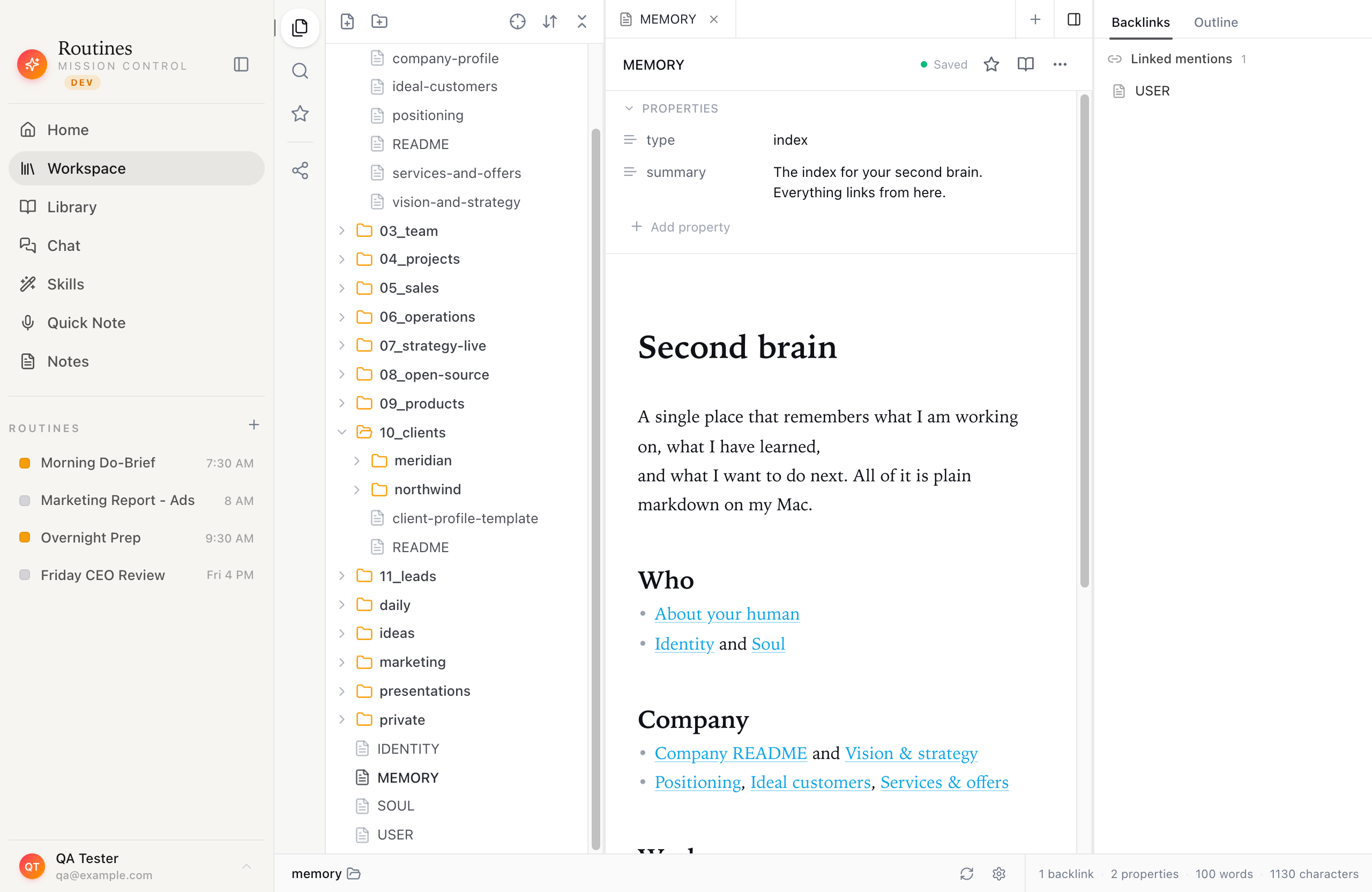
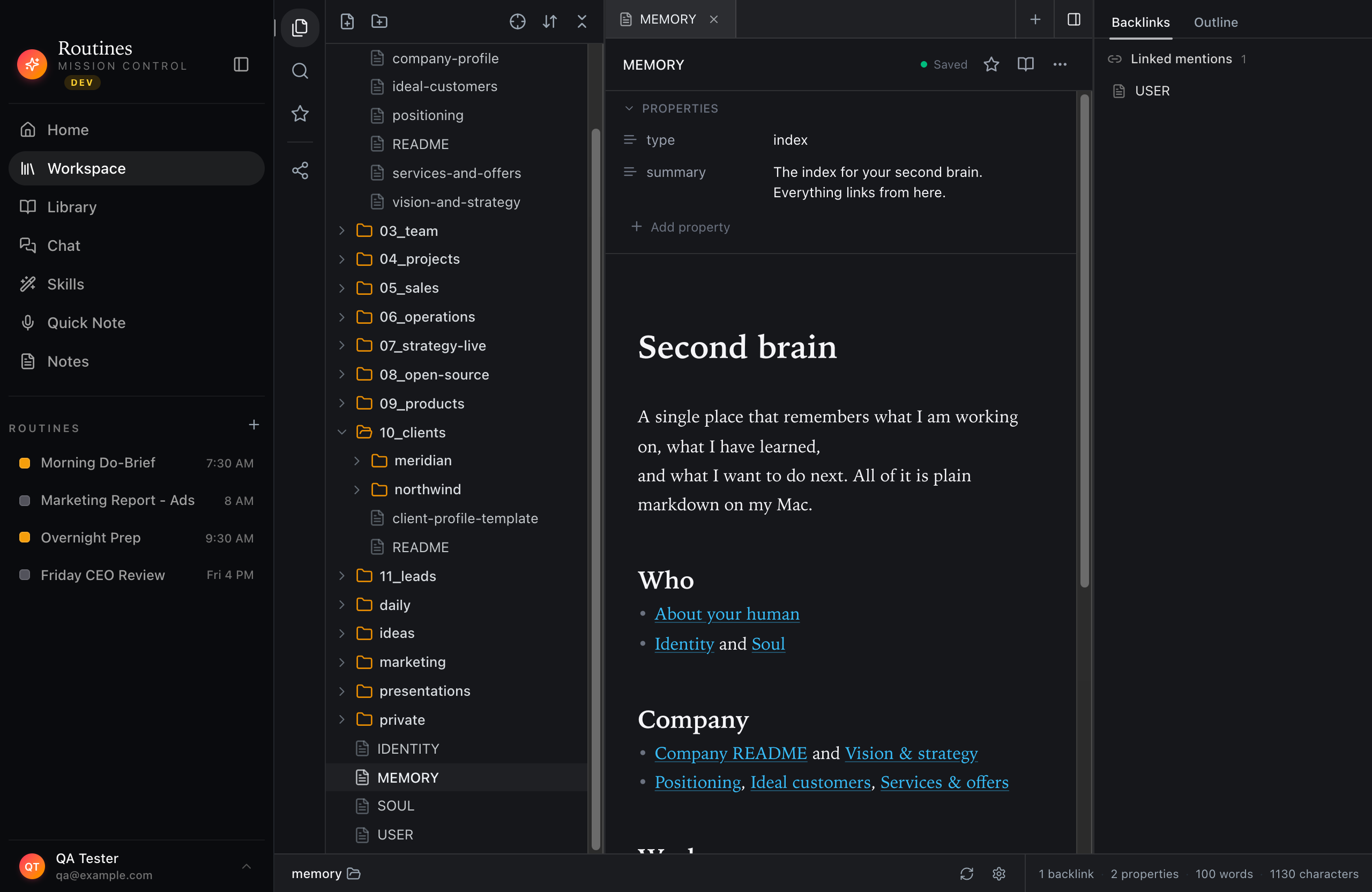
On your Mac, plain markdown plus local SQLite. Cloud Sync is optional
Synced to the vendor cloud
Offline transcription
Local Whisper fallback for meetings, no internet needed
Cloud only
Meeting notes
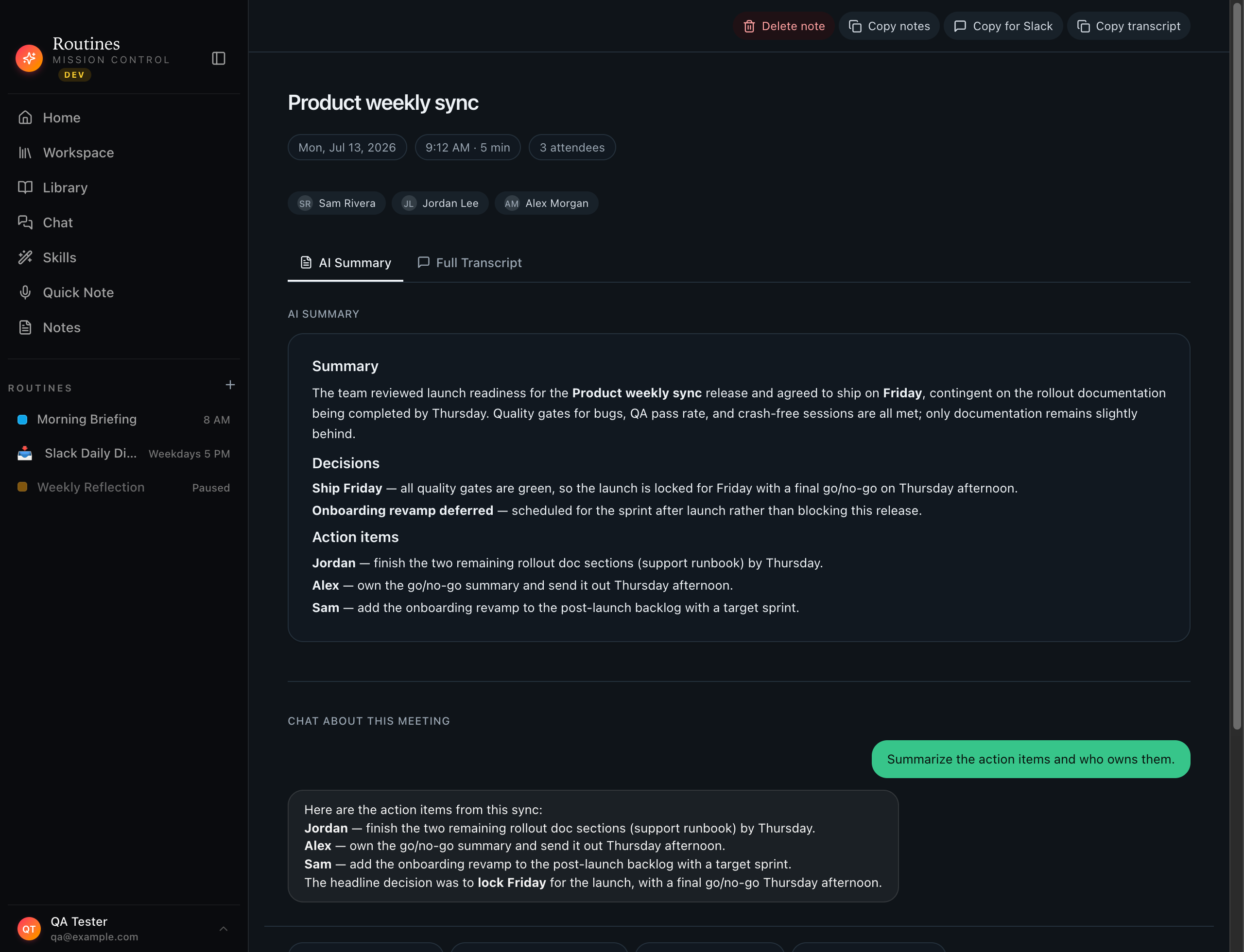
Speaker-separated, live, with AI summaries
Notetaker announced by updated terms (2026-08-03), not shipped
Hotkey dictation
Global hotkey, streams as you speak, auto-paste
Flow-style dictation, deeply polished
Dictation polish
LLM cleanup plus Romanian diacritics on non-English
Tone, formatting, and command polish built in
Clipboard history
Last 500 copies, searchable, on your Mac
Not included
Scheduled AI routines
Cron and event triggers, plain-English setup
Not included
Model choice / BYOK
AI included with an account, or your own Claude, GPT, or OpenRouter key in the Keychain
Managed models, no key needed
Install
Notarized DMG, about 60 seconds
Polished native install
Price
One app, 7-day trial, then a license
Free 2,000 words a week; Pro $15/mo, $12/mo annually (2026-08-01)

Checkmarks both ways · an honest comparison

What changed · 2026-08-03

Wispr Flow is preparing a meeting notetaker.

On August 3, 2026, TechCrunch reported that Wispr Flow updated its Terms of Service and privacy policy and emailed customers about the change. The updated terms describe a Notetaker. Nothing has shipped: no product, no date, no pricing. Wispr Flow did not respond to TechCrunch's request for further comment.

Source: TechCrunch, August 3, 2026.

For Notetaker, Input may also include Meeting Data, including meeting audio, participant information, meeting metadata, speaker labels, meeting transcripts, and other information processed in connection with a meeting. Output may include AI-generated meeting transcripts, summaries, action items, meeting insights, speaker attribution, and other meeting-related content.
Wispr Flow, updated Terms of Service, quoted by TechCrunch on August 3, 2026

TechCrunch frames the move as taking on Granola, Fireflies, Read AI, Otter and Fathom. It is not yet clear whether it will be a Granola-style system-audio notetaker that keeps no recording, or a full meeting recording tool. Either way the terms put the meeting audio, names and speaker labels of everyone else on the call into a vendor cloud, and that is the architecture question this page is about.

For context, not accusation: Otter is defending a consolidated class action over recording consent, and Fireflies is defending Illinois biometric claims over voiceprints. Those are filed allegations, not findings, and as of August 2026 no court has ruled on the merits.

One more piece of history, stated plainly: this was not a breach. In March 2026 Wispr Flow proactively invalidated its own SOC 2 Type II and ISO 27001 after the compliance platform behind that program came under scrutiny over allegations that platform denies. Wispr Flow said so in its own help center, then engaged A-LIGN as its auditor and Drata as its compliance platform. The narrower point is about how a certificate gets produced, not about the honesty of anyone involved.

We keep the sourced version on a separate page: the full Wispr Flow transparency audit.

Hotkey dictation

Press a shortcut, speak, and it lands where you're typing.

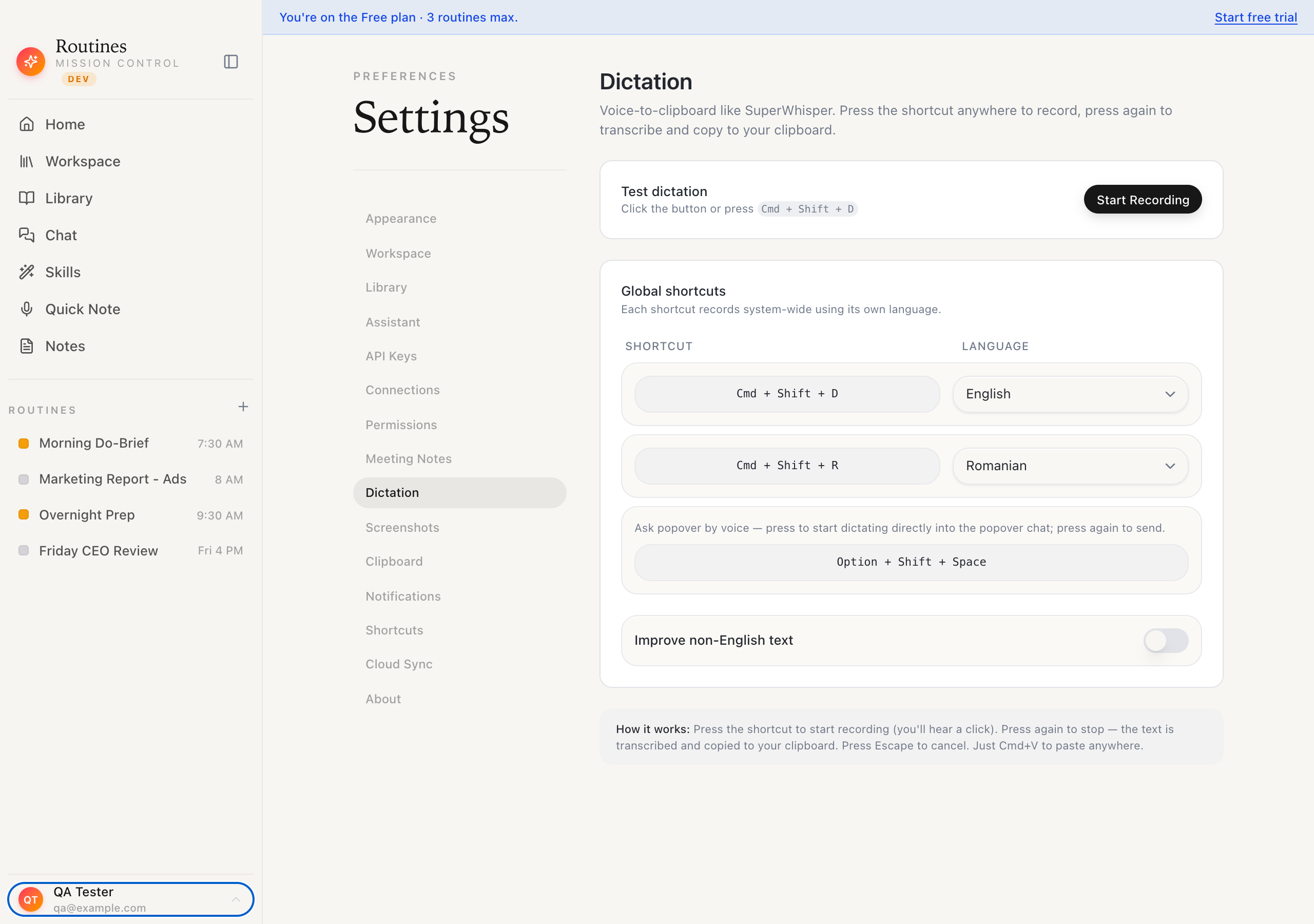
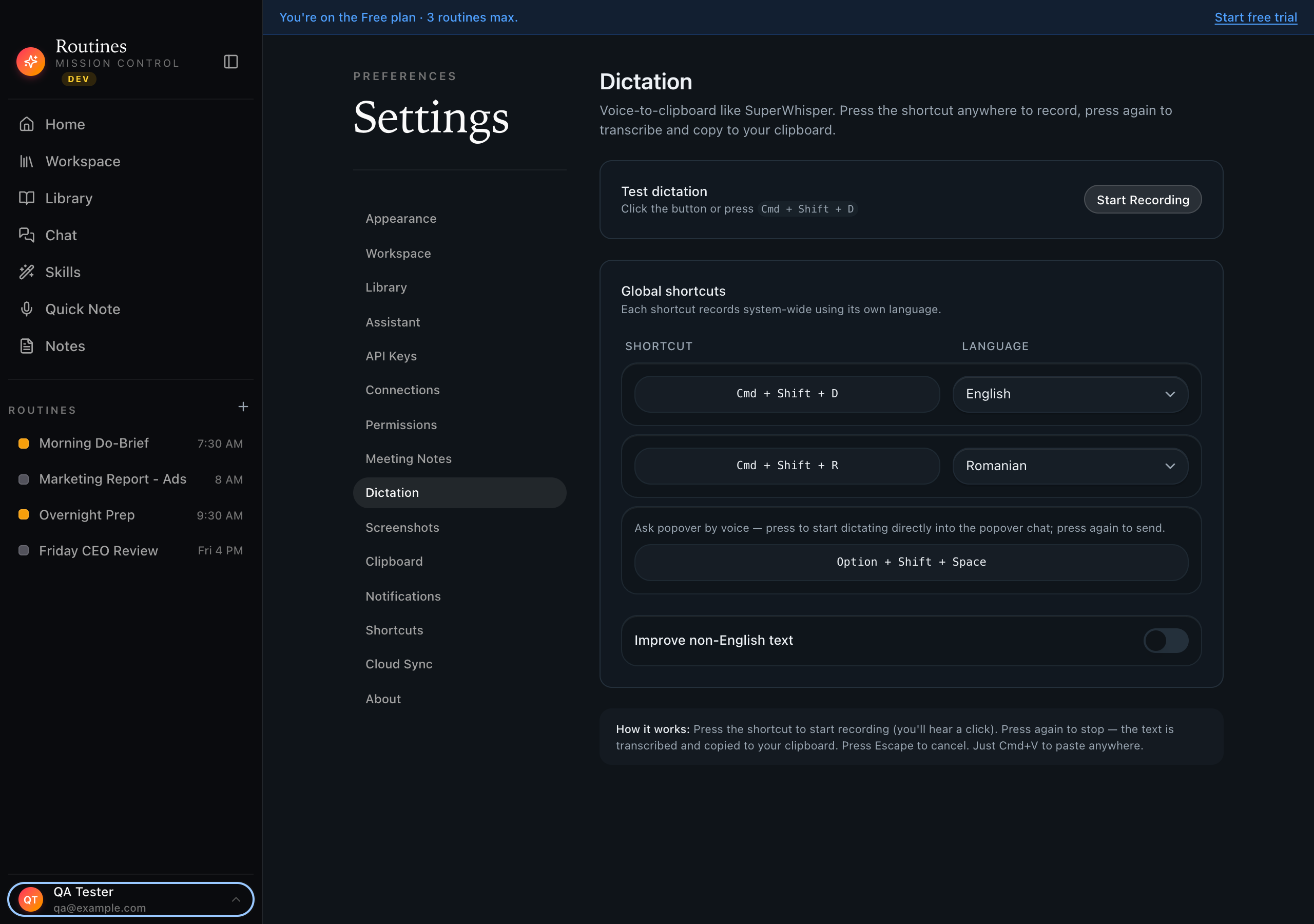
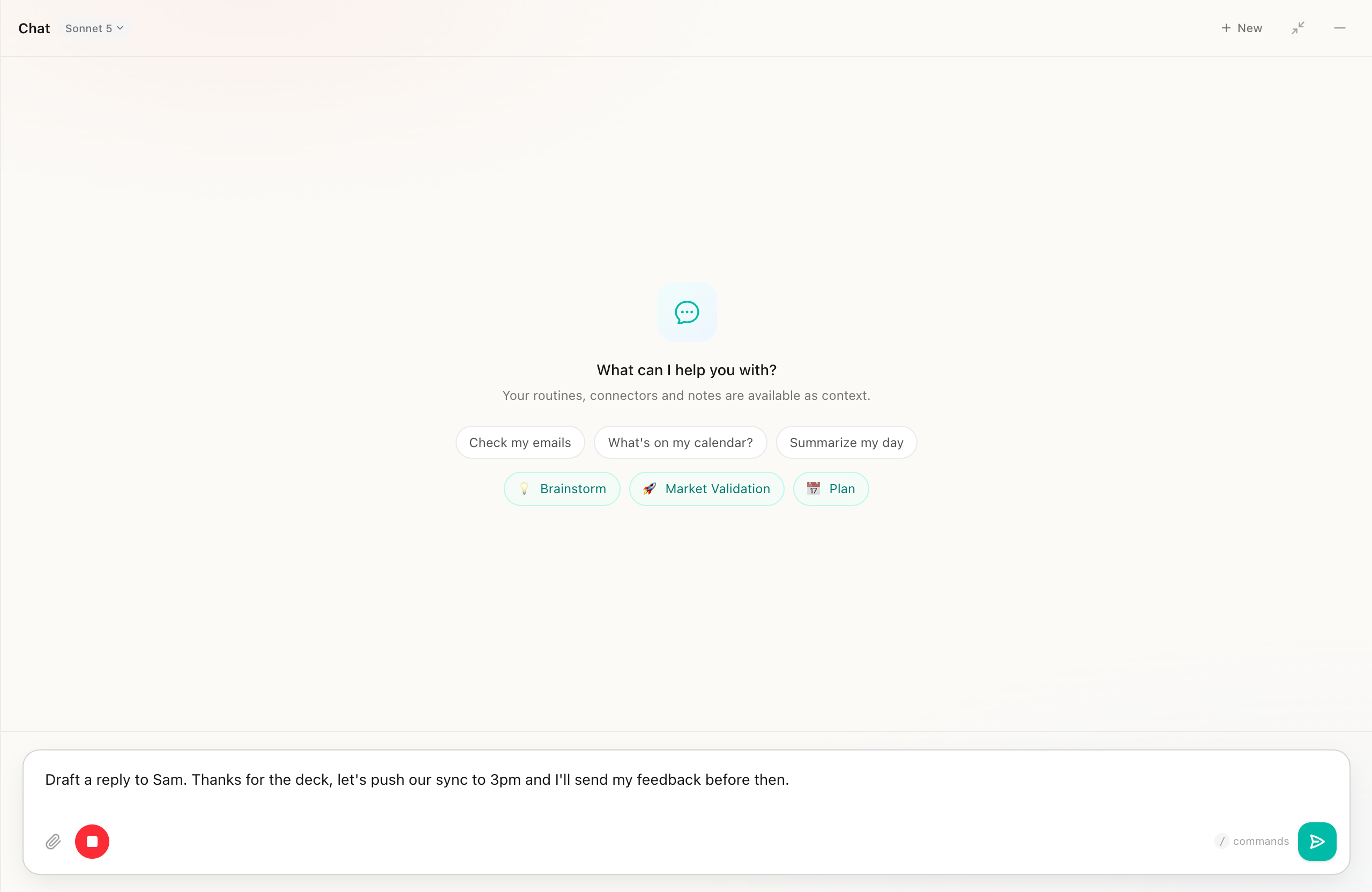
A global hotkey records system-wide, streams your words to transcription as you speak, then auto-pastes into the focused app. Assign a second shortcut per language, including Romanian diacritics on non-English speech.

Routines dictation settings showing per-language global hotkeys, Cmd+Shift+D for English and Cmd+Shift+R for Romanian, plus a voice-to-popover shortcut and an improve-non-English-text toggle

One hotkey per language · voice straight to the clipboard

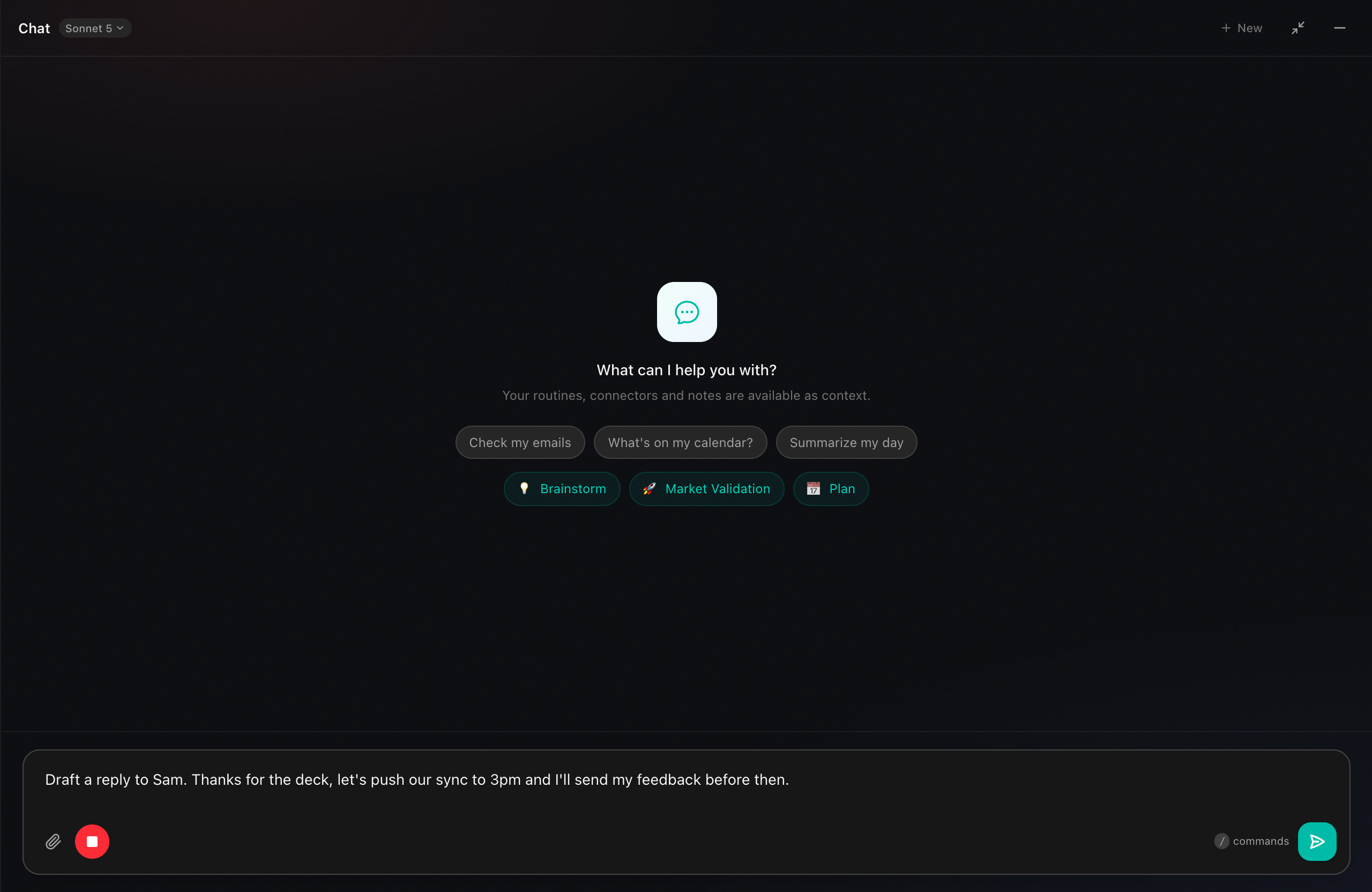
Routines chat with live dictation streaming a drafted email reply into the input field as it is spoken, with the recording stop button active

Words appear as you speak · then auto-paste

When Wispr Flow is the better choice

  • Dictation is the one feature you live in all day and you want the most polished flow, tone, and voice commands available.
  • You want dictation and nothing else, and would rather not have meetings, clipboard, routines and a memory vault in the same app.
  • You dictate in one of the 100+ languages Wispr Flow supports, including code-switching, or you need it on Windows and iOS as well as the Mac.

When Routines fits

  • You want dictation plus meeting transcription, clipboard history, and scheduled AI routines in one native app.
  • You want the data path written down: dictation and meeting audio go to Deepgram for transcription, with a local Whisper fallback behind both and meeting transcription that still works with no network, prompts go through Routines AI to Anthropic without being stored, or straight to the provider whose key you paste, and notes, transcripts and clipboard history sit in a local database and plain markdown on your Mac.
  • You want to bring your own Claude, GPT, or OpenRouter key and swap models whenever you like.

Beyond voice typing

Voice typing is one hotkey. Routines runs the rest of the day.

Once the words are on the page, Routines keeps going: scheduled AI routines on a home dashboard, speaker-separated meeting notes, and a searchable local memory vault, all in the same native Mac app.

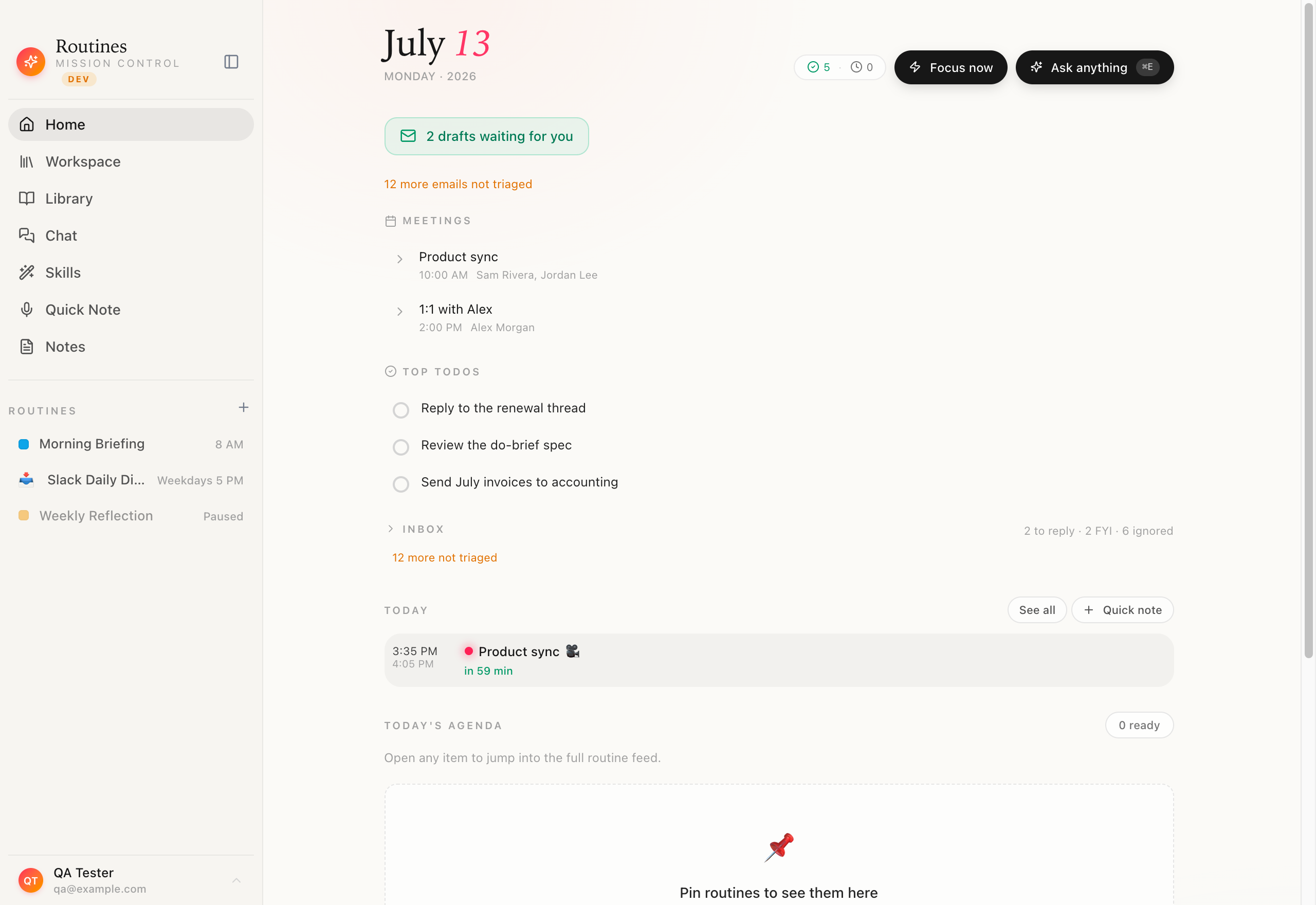
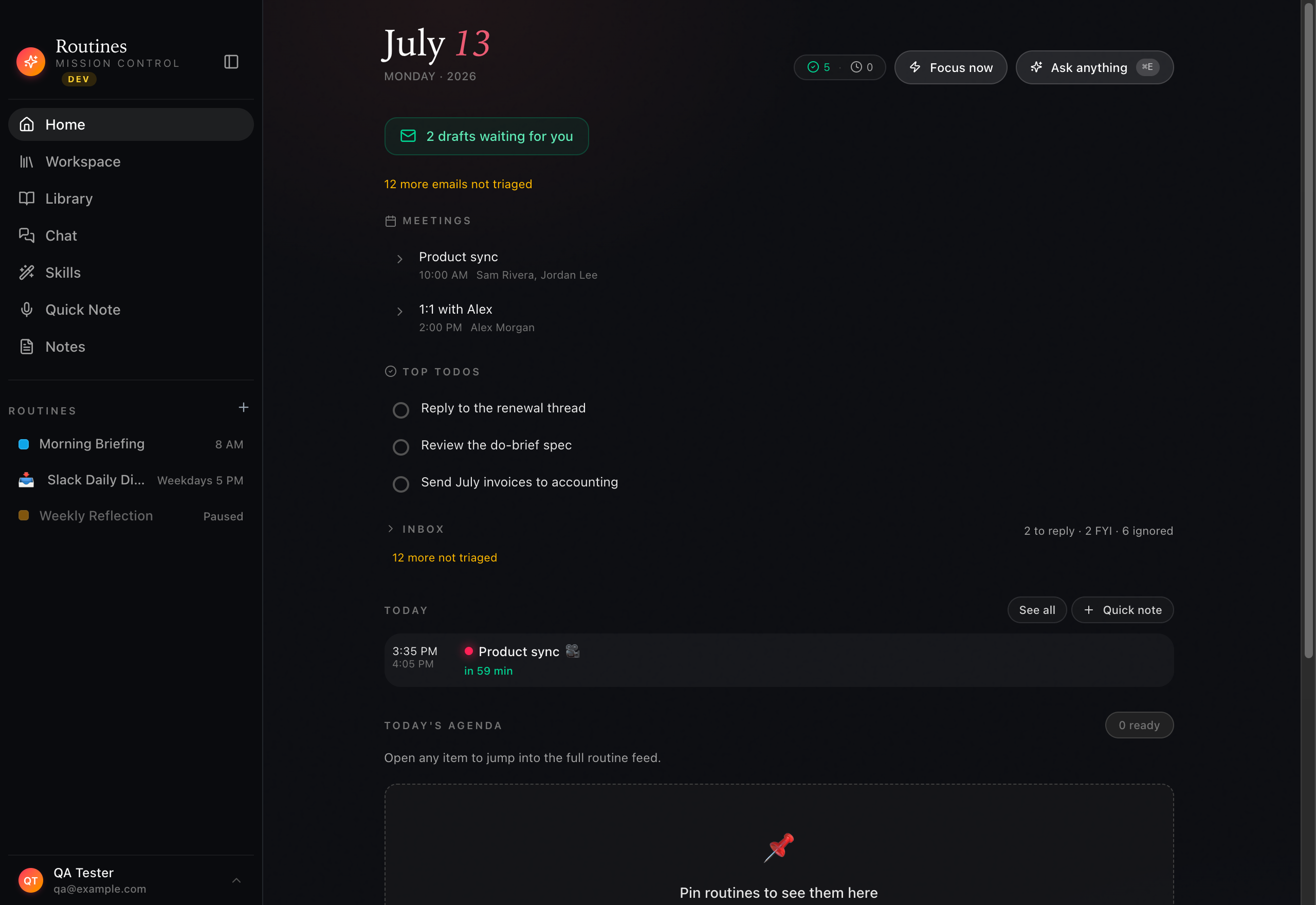
Routines mission control home dashboard showing scheduled AI routines like a morning do-brief, ads report, and CEO review with their run times

Scheduled AI routines · cron and event triggers

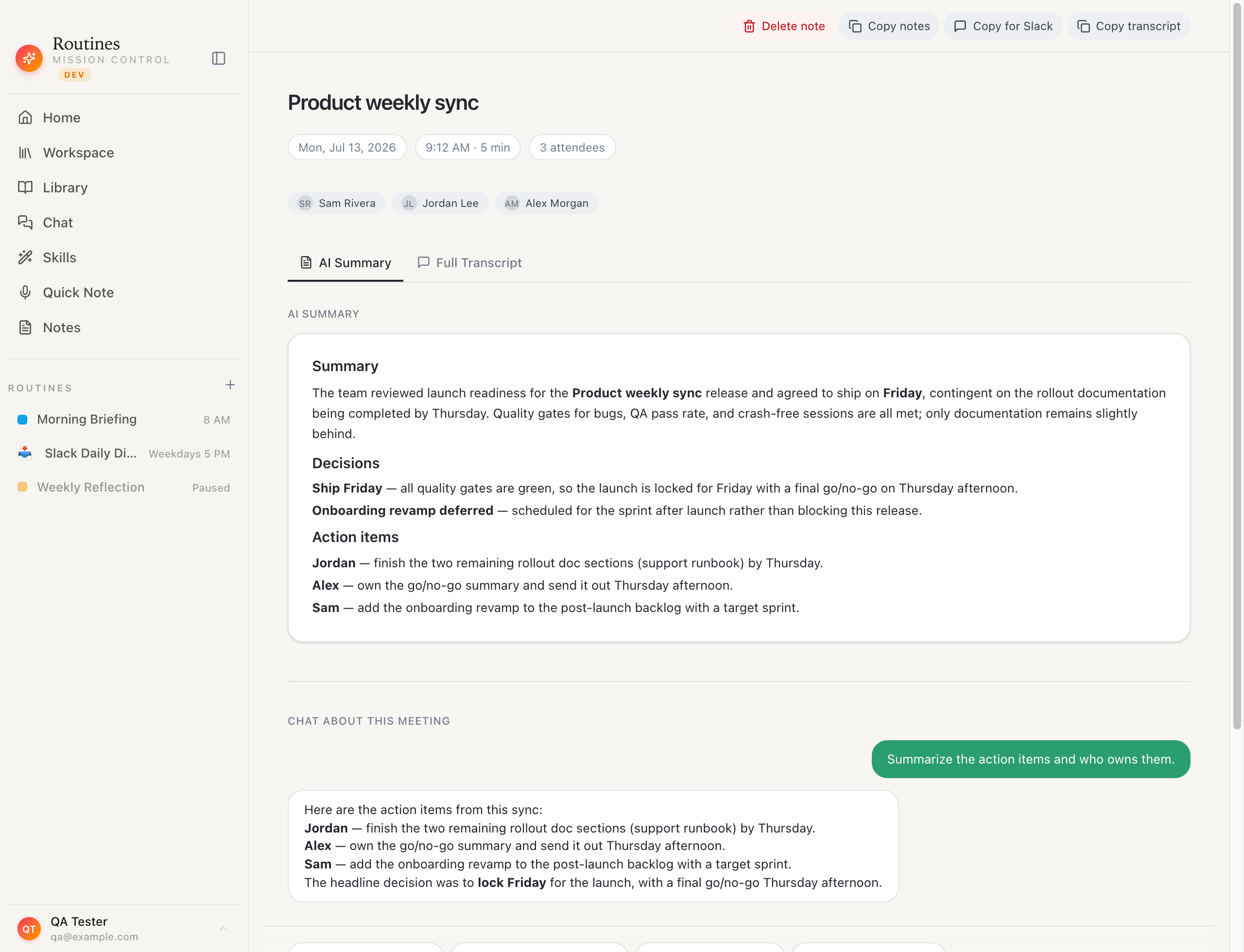
Routines recorded meeting view with a speaker-separated transcript and an AI-generated summary of the conversation

Meeting notes · speaker-separated

Routines workspace showing a searchable local memory vault of markdown notes stored on the Mac

Local memory vault · markdown on your Mac

FAQ

Routines vs Wispr Flow, answered.

Is Wispr Flow private?

Wispr Flow runs in the cloud to deliver its polished dictation, so your audio and transcribed text are processed on its servers under its privacy policy. That is a normal model for a managed product. Routines names each path instead: dictation audio streams to Deepgram as you speak; meeting audio goes to Deepgram as well, with a local Whisper fallback that works offline; prompts go to the AI provider whose key you paste; and your notes, transcripts and clipboard history sit in a local database and plain markdown on your Mac, with Cloud Sync optional. Speech reaches a transcription vendor in both products. What differs is that we name ours, and the finished text stays in your own files.

Is Wispr Flow launching a meeting notetaker?

Its updated Terms of Service, reported by TechCrunch on August 3, 2026, add a Notetaker section covering meeting audio, participant information, speaker labels and meeting transcripts as inputs. As of August 4, 2026 nothing has shipped: no product, no date, no pricing, and Wispr Flow did not respond to TechCrunch's request for further comment. It is also not yet clear whether it will be a Granola-style system-audio notetaker that keeps no recording, or a full meeting recording tool.

Does Routines dictate as well as Wispr Flow?

Wispr Flow has spent a long time refining flow-style dictation, tone, and command handling, and it shows. Routines streams your words to transcription as you speak and auto-pastes into the focused app, with LLM cleanup and Romanian diacritics on non-English. If dictation polish is the single thing you care about most, Wispr Flow is excellent at it.

Can I use my own AI model with Routines?

Yes, and you do not have to. Signing in gives you Routines AI with credit included, no key required. If you would rather run your own, Routines talks to Claude, GPT, or OpenRouter directly from your Mac using a key you store in the macOS Keychain, or you can sign in with a ChatGPT account. You can swap models any time and keep all your memory and history.

What does Routines do besides dictation?

Routines records and transcribes meetings with speaker separation, keeps a searchable clipboard history on your Mac, and runs scheduled AI routines like morning briefings and email digests. Your notes are plain markdown in a folder you pick, readable in Obsidian. Cancel us and the second brain still opens.

Do I need a subscription?

Routines offers a 7-day trial with no credit card, then unlocks with a license key. Dictation carries no per-minute cost and works offline. AI is the only metered part: it draws on the credit included with your account, or on your own provider bill if you configure a key. Either way your notes are plain markdown in a folder you pick.

Dictate, record, automate. Your notes stay yours.

One native Mac app for dictation, meetings, clipboard, and routines, with your notes and transcripts stored on your machine. The setup details live in our guide to dictation on Mac.

Download